

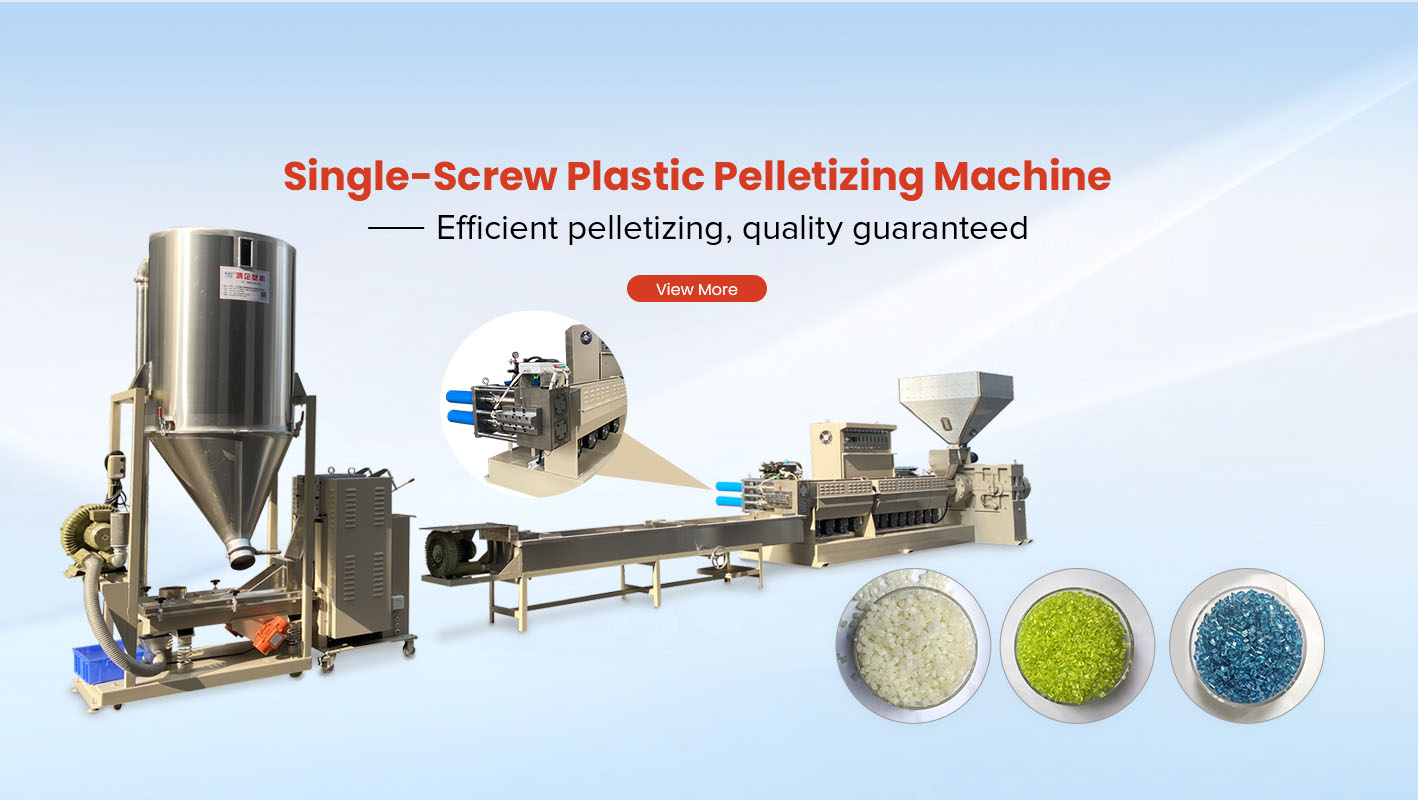
A plastic pelletizer is an important machine used in plastic recycling and polymer processing industries. It converts continuous plastic materials produced by extrusion into uniform pellets that can be reused in manufacturing.
Choosing between a pelletizer and an extruder is an important decision for plastic manufacturers, recycling companies, and polymer processing businesses. Although these two machines are often used together in plastic production lines, they perform different functions.
Plastic pelletizing is a critical stage in polymer recycling and plastic manufacturing. However, problems such as unstable output, poor pellet quality, excessive impurities, and inconsistent material properties can reduce production efficiency.
Vertical mixers are tall industrial machines that circulate bulk material upward and return it through gravity to create a more uniform batch. Plastic factories and recycling plants use them to prepare pellets, granules, flakes, regrind, masterbatch, and selected powders before the next production stage.
A vertical mixer for plastic resin is an industrial machine that circulates pellets, granules, regrind, flakes, powders, or additives through a tall mixing chamber. Material is lifted from the lower section and returned through gravity, creating repeated circulation until the batch reaches the required distribution.
The key differences between a vertical mixer and a horizontal mixer lie in material movement, workshop footprint, batch size, discharge method, cleaning access, and the way powders, pellets, flakes, or additives circulate inside the chamber.
Recycled plastic pellets vary in size and color because their final appearance is affected by feedstock consistency, polymer degradation, contamination, melt stability, cooling, strand movement, cutter condition, and screening efficiency.
A plastic granulator and a pelletizing extruder both prepare plastic for reuse, but they perform fundamentally different operations. A plastic granulator mechanically cuts solid scrap into flakes or regrind without melting it.
Single-stage and two-stage pelletizing lines can both process recycled plastic, but they solve different feedstock problems. A single-stage line completes melting, filtration, extrusion, and pellet formation through one extruder.